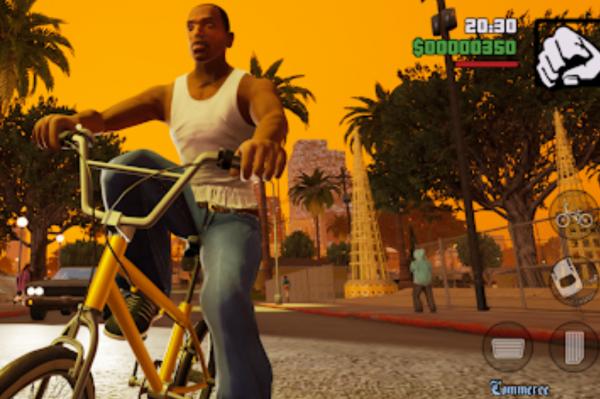

Sometimes that invitation makes perfect sense. Older games can struggle with modern hardware, outdated controls, or technical limitations that prevent new players from appreciating what made them special. A thoughtful remaster can remove those barriers without sacrificing the original experience.
But not every remaster solves a meaningful problem.
Some games already look good, run well, and remain readily available. In those cases, a new edition raises an obvious question: are we paying for genuine improvements, or are publishers simply finding new ways to sell us our own memories?
What Actually Makes a Video Game Remaster Worth Buying?
The term “remaster” sounds straightforward, but it covers a surprisingly wide range of projects.
One remaster might offer little more than higher-resolution textures and support for modern displays. Another could improve character models, lighting, animation, performance, accessibility, and controls while preserving the underlying game.
These are very different propositions, even when both products carry the same label.
The value of a remaster should therefore be judged by what it changes, not simply by how prominently the word “Remastered” appears on its cover.
A useful remaster should answer at least one important question:
- Does it make an older game significantly more comfortable to play?
- Does it improve performance or compatibility on modern hardware?
- Does it preserve content that might otherwise become difficult to access?
- Does it offer meaningful improvements to accessibility?
- Does it provide a better entry point for someone who never played the original?
- Does the price reflect the scale of the improvements?
A remaster does not need to accomplish everything on this list. But if it accomplishes almost nothing, players have good reason to question its value.
The Difference Between a Remaster and a Remake Matters
Before discussing whether remasters are worth buying, it helps to separate them from remakes.
A remaster generally improves an existing game while retaining much of its original structure. The goal is often to make the familiar experience look, sound, or perform better.
A remake can involve rebuilding substantial portions of the game, sometimes using new technology, redesigned environments, updated mechanics, or revised presentation.
The distinction is not always perfectly clear. Publishers use these terms differently, and some projects sit somewhere between the two.
Still, the difference matters when evaluating price and development effort.
Consider Dead Space, released in 2023. Electronic Arts described it as a ground-up remake of the survival horror classic, with rebuilt visuals, audio, and gameplay improvements.
That is a different undertaking from simply updating textures in an existing release.
Players can reasonably expect a different scale of work from a remake, although a larger production does not automatically guarantee a better game.
Horizon Zero Dawn Remastered: Did This Game Really Need Another Edition?
Horizon Zero Dawn is an especially interesting example because the original game was hardly an ancient technical relic.
Released in 2017, Guerrilla Games’ open-world action RPG already featured striking environments, distinctive machine designs, and a visual presentation that remained impressive years later.
When Horizon Zero Dawn Remastered arrived in 2024, it raised a familiar question: why remaster a game that many players still considered visually appealing?
On the surface, the answer appears to be improved presentation.
The remastered edition offers enhanced visuals and modern platform features, including technical improvements intended to bring the original experience closer to contemporary expectations.
But visual fidelity is only part of the discussion.
Horizon Zero Dawn remains compelling because of its world-building, machine combat, and the mystery surrounding its post-apocalyptic setting.
Those qualities existed before the remaster.
For players interested in what continues to make Aloy’s original adventure enjoyable, FRANT’s look at why Horizon Zero Dawn Remastered is still worth playing offers a game-specific companion to this broader discussion.
That leads to an important distinction: a remaster can be a worthwhile way to experience a great game without necessarily being an essential purchase for everyone who already owns it.
Better Graphics Do Not Automatically Create a Better Game
Modern graphics technology can make a remarkable difference.
Improved lighting can change the atmosphere of an environment. Better textures can reveal details that were previously difficult to appreciate. More convincing character models can help dialogue scenes feel natural.
But there is a limit to what visual upgrades can accomplish.
If a game’s missions are repetitive, improving the shadows will not make its objectives more interesting.
If its combat feels awkward, sharper textures will not necessarily improve the controls.
If its story fails to engage the player, more detailed facial animations may not solve the underlying problem.
This is why screenshots can be misleading when evaluating remasters.
A side-by-side comparison might show obvious visual differences while revealing very little about how the updated game actually feels.
The improvements that matter most are not always the ones that look most impressive in marketing material.
Performance Improvements Can Be More Valuable Than Visual Upgrades
For many players, a stable frame rate is more important than slightly better textures.
A game that previously struggled with inconsistent performance may become significantly more enjoyable when it runs smoothly.
This is particularly relevant for action games, racing games, and titles that depend on precise input timing.
Lower loading times can also make a noticeable difference, especially in games where players frequently travel between areas or restart challenging encounters.
These improvements may not generate the same excitement as redesigned environments, but they affect the experience throughout an entire playthrough.
However, performance should be evaluated carefully.
A remaster that introduces more demanding graphics settings might not run better on every PC. Some players may need to lower settings or upgrade hardware to benefit from the new presentation.
Higher technical ambition is not the same thing as better optimization.
Mass Effect Legendary Edition Shows the Value of a Complete Package
Mass Effect Legendary Edition demonstrates another way a remaster can justify its existence.
Rather than offering one updated game in isolation, the collection brings together the single-player campaigns of the original Mass Effect trilogy and a substantial library of downloadable content.
It also includes visual improvements and gameplay adjustments, particularly noticeable in the first game.
This changes the value proposition.
Players are not simply paying to see familiar environments in higher resolution. They are receiving a more convenient way to experience an interconnected narrative across three games.
For newcomers, the collection removes some of the friction associated with purchasing and configuring older releases separately.
For returning players, it offers an opportunity to revisit Commander Shepard’s story with updated presentation and refinements.
There are still reasons someone might prefer aspects of the original releases. Remasters can alter visual details or mechanics that long-time fans remember fondly.
But Mass Effect Legendary Edition illustrates how packaging, accessibility, and mechanical improvements can make a remaster valuable beyond its graphical upgrades.
Nostalgia Is Powerful, but It Is Not a Product Feature
Publishers understand that players form emotional connections with games.
A familiar soundtrack can bring back memories of a particular period in someone’s life. Returning to a beloved fictional world can feel like visiting an old friend.
That emotional connection is real, and there is nothing wrong with enjoying it.
The problem begins when nostalgia becomes a substitute for evaluating what a new release actually offers.
A remaster cannot recreate the circumstances surrounding your first playthrough.
You may have experienced the original game during a school holiday, played alongside friends, or discovered it at a time when its mechanics felt revolutionary.
Years later, your expectations and circumstances may be completely different.
Even a technically excellent remaster cannot guarantee that the experience will feel the same.
Sometimes the game has aged. Sometimes the player has changed.
And sometimes both are true.
Why Some Older Games Are Better Left Visually Imperfect
Not every graphical limitation needs to be corrected.
Older games often developed distinctive visual identities around the technology available at the time.
Low-resolution textures, simplified character models, fixed camera angles, and unusual lighting techniques sometimes contributed to their atmosphere.
Improving technical fidelity can unintentionally change that atmosphere.
A horror game that originally relied on darkness and visual uncertainty might feel less unsettling when environments become brighter and more detailed.
A stylized adventure might lose some of its character when its original art direction is replaced with more realistic materials.
This does not mean older graphics are inherently superior.
It means that visual quality should not be measured exclusively by resolution, polygon counts, or lighting complexity.
Art direction is about deliberate choices.
A good remaster should understand why those choices worked before deciding which ones to change.
Game Preservation Is a Better Argument Than Nostalgia Alone
One of the strongest arguments for remasters has little to do with improved graphics.
Video games are unusually vulnerable to technological obsolescence.
Older titles may depend on discontinued hardware, outdated operating systems, unavailable online services, or physical media that becomes increasingly difficult to obtain.
Unlike a book that can often be read decades after publication, a video game may require a complicated combination of hardware and software simply to function.
Remasters can help address this problem by bringing older experiences to current platforms.
However, commercial remasters and preservation are not identical.
A publisher might update a game while changing content, removing features, or making the original edition harder to purchase.
That can create a situation where the new version becomes more accessible while the historical version becomes less accessible.
Ideally, players and researchers should have opportunities to experience both.
Preservation should involve maintaining access to the original work, not merely replacing it with the latest commercial interpretation.
Should Publishers Keep Selling the Original Version?
This question becomes especially important when a remaster replaces an older release on digital storefronts.
Some players may prefer the original game’s lighting, character models, controls, or performance requirements.
Others may own hardware that runs the older edition comfortably but struggles with the remaster.
Removing the original can therefore reduce consumer choice.
There are legitimate reasons publishers may consolidate versions, including maintenance costs and licensing complications.
But those considerations do not eliminate the value of keeping historical releases available whenever practical.
A remaster should ideally expand access rather than narrow it.
The Pricing Problem: How Much Should Players Pay for a Familiar Game?
Pricing is often the deciding factor in whether a remaster feels worthwhile.
A substantial technical overhaul sold at a reasonable price can be attractive, especially to newcomers.
A modest graphical update sold at a premium price may be harder to justify.
The calculation becomes more complicated for players who already purchased the original.
Should they pay full price again?
Should publishers offer a discounted upgrade?
Or should certain improvements be provided through a free update?
There is no universal answer.
Development costs vary, and some remasters involve extensive work.
However, publishers should communicate clearly about what existing owners receive and whether their previous purchase qualifies them for a discount.
Horizon Zero Dawn Remastered is an example of a release that offered an upgrade path for eligible existing owners, rather than requiring every returning player to purchase the new edition at its standard price.
Such arrangements can make remasters more appealing, although their value still depends on the improvements offered and the player’s circumstances.
Why Remasters Are Attractive to Publishers
From a business perspective, remasters offer several potential advantages.
Publishers can revisit established intellectual properties with recognizable characters and existing audiences.
They may be able to reuse substantial portions of the original game’s design and content, although the amount of work required varies greatly between projects.
Remasters can also introduce older franchises to new players ahead of sequels or other releases.
For a company, this can be a reasonable commercial strategy.
But the interests of publishers and players are not always identical.
A publisher may see an opportunity to generate revenue from an established property.
A player may see another purchase competing for money that could be spent on a completely new game.
Neither perspective is surprising.
The challenge is creating a product that offers enough value to justify the transaction.
Are Remasters Taking Resources Away From New Games?
Critics sometimes argue that publishers spend too much time revisiting old games instead of developing new ideas.
There is some logic behind this concern.
Development resources are finite, and companies must decide which projects receive funding and personnel.
However, it would be too simplistic to assume that every remaster directly prevents an original game from being developed.
Different studios and teams may work on different projects. Some remasters are handled by specialized developers, while larger internal teams continue building new releases.
Nevertheless, an industry that relies too heavily on familiar properties risks becoming creatively predictable.
Players benefit from having access to classic games, but they also need new experiences worth remembering.
The ideal situation is not a choice between preservation and innovation.
It is an industry capable of supporting both.
When a Remaster Can Actually Make the Game Worse
It is tempting to assume that newer technology always produces a superior edition.
Unfortunately, that is not guaranteed.
A remaster can introduce bugs that were absent from the original.
Changes to lighting may damage the intended atmosphere.
Altered controls can frustrate players familiar with the original mechanics.
Performance can also suffer if updated visuals place greater demands on hardware.
Even seemingly small changes can matter when they affect how a game communicates information to the player.
For example, a darker environment may have originally relied on specific lighting cues to guide exploration.
Changing those cues without considering level design could make navigation less intuitive.
This is why remaster quality should be evaluated through actual gameplay rather than promotional screenshots alone.
Why New Players and Returning Players See Different Value
The same remaster can be an excellent purchase for one person and unnecessary for another.
Someone who has never played Horizon Zero Dawn may appreciate being able to experience its story with modern presentation and technical improvements.
A returning player who recently completed the original might find those changes less compelling.
Similarly, a player discovering the Mass Effect trilogy for the first time may see Legendary Edition as a convenient introduction.
Someone who already owns the original games and their downloadable content may have a different opinion.
These differences are not contradictions.
They reflect the fact that value depends on what a player already owns, what they enjoy, and how much they are willing to spend.
Reviews should therefore distinguish between recommendations for newcomers and recommendations for existing owners.
How to Decide Whether a Remaster Is Worth Your Money

Before purchasing a remaster, consider the following questions.
1. Have You Already Played the Original?
If the answer is no, a well-made remaster may offer the most convenient way to experience the game.
If you already finished it recently, consider whether the improvements are significant enough to justify another playthrough.
2. Are the Changes More Than Cosmetic?
Look for meaningful improvements to controls, performance, accessibility, and quality-of-life features.
Better graphics can be valuable, but they should not be the only consideration.
3. Does the Original Still Work Well?
If the original remains accessible and runs comfortably on your hardware, the remaster may be optional rather than necessary.
4. Is There an Upgrade Discount?
Check whether existing owners qualify for a reduced price and confirm the conditions for the platform where you purchased the game.
5. Have Independent Reviews Tested the Performance?
Marketing trailers rarely provide a complete picture of technical quality.
Look for reviews that discuss frame rates, bugs, loading times, and compatibility.
6. Would You Rather Play Something New?
Sometimes the most important question is whether revisiting a familiar game is more appealing than discovering an entirely different experience.
A remaster can be good without being the best use of your entertainment budget.
What the Best Remasters Understand About Their Original Games
The strongest remasters recognize that technical improvements are only valuable when they support the qualities that made the original memorable.
They preserve the core experience while removing unnecessary friction.
They improve accessibility without assuming every old design decision was a mistake.
They respect the original art direction rather than treating visual realism as the only measure of progress.
And they give players a clear reason to choose the new edition.
That reason might be better performance, broader platform availability, improved controls, or a more complete collection of content.
What matters is that the improvement has a meaningful effect on the experience.
Conclusion: A Great Remaster Should Offer More Than a Familiar Memory
Video game remasters are not inherently unnecessary, nor are they automatically worth buying.
At their best, they preserve important games, improve accessibility, solve technical problems, and introduce memorable experiences to audiences who missed them the first time.
Mass Effect Legendary Edition demonstrates the appeal of a more complete and convenient package.
Horizon Zero Dawn Remastered raises useful questions about how much visual and technical improvement is needed before a relatively modern game deserves another release.
And ambitious remakes such as Dead Space remind us that rebuilding a classic can involve a fundamentally different creative undertaking.
Nostalgia can make returning to a game emotionally appealing, but nostalgia alone does not establish the value of a new purchase.
Players should look beyond improved screenshots and ask whether the updated edition genuinely makes the game more enjoyable, accessible, or complete.
Sometimes the answer will be yes.
Other times, the original game may still provide everything that matters.
The best remaster is not necessarily the one that makes an old game look newest. It is the one that gives players a meaningful reason to experience it again.