
Instead, they may remember the first time they entered Stormwind, the fall of Arthas Menethil, or the moment their guild finally defeated a difficult raid boss after weeks of preparation.
Ask someone who spent years playing Ragnarok Online, and the conversation may quickly turn toward Prontera, familiar background music, guild friendships, and the strange feeling of returning to a town that once felt like a second home.
These memories suggest that MMORPGs offer something beyond ordinary gameplay systems.
They create worlds that players can develop emotional relationships with.
But this raises an important question: can great storytelling keep an MMORPG alive longer than good gameplay?
At first, the answer might seem obvious. A game needs enjoyable mechanics to survive. Players must have reasons to log in, fight enemies, complete activities, and interact with one another.
Yet history suggests that mechanical quality alone does not explain why certain online worlds remain meaningful for decades.
An MMORPG can offer excellent combat and still struggle to retain players. Another can have outdated mechanics yet maintain a loyal community because people care deeply about the world and the relationships they have built within it.
The real question is not whether storytelling or gameplay matters more in isolation.
It is how these elements work together to make a virtual world worth returning to.
MMORPGs Are More Than Games With Large Maps
Modern gaming often treats MMORPGs as collections of systems.
There are leveling mechanics, character classes, equipment progression, crafting systems, dungeons, raids, competitive activities, and daily objectives.
These features are essential because they provide structure.
Without meaningful activities, players have little reason to spend time in the game.
However, a large collection of activities does not automatically create a memorable world.
Imagine an MMORPG with hundreds of quests, dozens of dungeons, and an enormous equipment system.
Now imagine that none of its locations feel distinctive, none of its characters are memorable, and none of its conflicts inspire curiosity.
The game might remain mechanically entertaining for a while.
But once players become familiar with its systems, what encourages them to care about the world itself?
That is where storytelling becomes important.
A compelling fictional world gives context to activities that might otherwise feel repetitive.
Defeating a powerful enemy becomes more meaningful when players understand who that enemy is, what they represent, and why the confrontation matters.
World of Warcraft Shows the Power of an Established Universe
World of Warcraft did not begin with a completely unfamiliar setting.
When Blizzard released the MMORPG in 2004, the Warcraft universe already had an established history through its strategy games.
Players were familiar with conflicts involving the Alliance, the Horde, the Burning Legion, and characters whose stories had developed across earlier titles.
This gave World of Warcraft an important advantage.
Its world was not simply a collection of zones designed for leveling.
It was a place where players could explore locations connected to stories they already knew.
For fans of Warcraft III, encountering familiar factions and characters could create an immediate emotional connection.
The world felt like an extension of something they had already experienced.
That connection continued as the MMORPG expanded its setting through new regions, characters, and conflicts.
For a related perspective, Binary Freedom’s discussion of Warcraft lore and World of Warcraft’s longevity explores the argument that the universe’s storytelling has played an important role in keeping players emotionally invested.
However, the influence of Warcraft’s lore should not be confused with proof that storytelling alone explains the game’s survival.
World of Warcraft also benefited from its social systems, accessibility relative to many earlier MMORPGs, ongoing expansions, and Blizzard’s ability to support a persistent online world.
The lore gave players reasons to care.
The gameplay and social environment gave them reasons to participate.
Why Arthas Menethil Remains More Memorable Than Many Raid Bosses
One of Warcraft’s most recognizable characters is Arthas Menethil.
His story is memorable because it is not simply about a powerful villain threatening the world.
It begins with a prince who believes he is protecting his people.
As his determination becomes increasingly extreme, his decisions lead him toward tragedy.
His pursuit of power and willingness to sacrifice his principles transform him into the Lich King.
By the time players confront Arthas in World of Warcraft: Wrath of the Lich King, the encounter carries narrative weight.
For players familiar with his history, the battle represents the culmination of a story that began long before the MMORPG expansion.
That changes how the encounter is experienced.
Mechanically, the fight still depends on raid design, coordination, and execution.
But emotionally, it means more than defeating an anonymous enemy with a large health bar.
Players are confronting a character whose decisions shaped an entire fictional world.
This is one of storytelling’s greatest strengths.
It can transform a gameplay objective into a memorable event.
Good Gameplay Creates Engagement, but Storytelling Creates Meaning
Gameplay and storytelling contribute to MMORPGs in different ways.
Gameplay determines how players interact with the world.
Storytelling helps explain why those interactions matter.
A well-designed combat system can make defeating enemies satisfying.
A compelling story can make players care about which enemies they defeat.
A rewarding progression system can motivate players to improve their characters.
A believable fictional world can make that progression feel like part of a larger journey.
Neither element completely replaces the other.
A game with excellent storytelling but frustrating controls may struggle to keep players engaged.
Likewise, a game with outstanding mechanics but an uninteresting setting may find it difficult to create lasting emotional attachment.
The strongest MMORPG experiences often emerge when gameplay and storytelling reinforce each other.
Players do not merely complete objectives.
They feel that their actions belong to a world with history, identity, and consequences.
Final Fantasy XIV Demonstrates the Value of Long-Term Narrative Investment
Final Fantasy XIV offers another useful example of storytelling within a persistent online world.
Its main scenario develops across multiple expansions, allowing players to follow recurring characters, political conflicts, and major narrative developments over many years.
This structure creates a form of long-term emotional investment.
Characters who initially appear relatively ordinary can become significant because players spend so much time with them.
Locations acquire meaning through repeated visits and changing circumstances.
Events from earlier storylines can influence how players interpret later developments.
The result is an experience that resembles a long-running fantasy series, except players participate through their own characters.
For some players, completing the main story becomes one of the strongest reasons to return when new content arrives.
They want to discover what happens next.
That motivation differs from the desire to obtain better equipment or complete harder raids.
It is driven by curiosity and emotional attachment.
However, Final Fantasy XIV also illustrates the importance of combining narrative with functional systems.
Its story would be much harder to appreciate if the game lacked stable online infrastructure, playable combat, and a sustainable content structure.
Storytelling provides motivation, but the surrounding experience must remain accessible enough for players to continue.
Can Players Become Loyal to a World Rather Than Its Mechanics?
One of the most interesting characteristics of long-running MMORPGs is that players sometimes remain attached even when they dislike certain gameplay changes.
They may criticize class balance, progression systems, or the direction of a new expansion.
Yet they continue following the game.
Sometimes they return after long breaks.
This behavior suggests that loyalty can extend beyond immediate mechanical satisfaction.
A player may feel connected to a fictional universe because it has been part of their life for years.
They remember the people they met, the challenges they overcame, and the places they explored.
The game becomes associated with personal history.
In this situation, storytelling operates on two levels.
There is the official narrative created by the developers.
And there is the personal narrative created by the player.
Both can contribute to long-term attachment.
The Most Powerful MMORPG Stories Are Sometimes Created by Players
Developers can write memorable characters and elaborate fictional histories.
But some of the strongest MMORPG memories are not scripted.
They emerge naturally through player interaction.
A guild might spend weeks preparing for an important battle.
Friends might travel together through dangerous territory and survive an encounter they were not prepared for.
A player might meet someone during an ordinary quest and continue playing alongside them for years.
These experiences become stories that players tell one another.
They may not appear in official lore, but they can be more personally meaningful than any cinematic sequence.
This is a major difference between MMORPGs and many traditional single-player games.
An MMORPG allows thousands of people to create overlapping experiences inside the same fictional world.
Its identity is shaped not only by what the developers write, but also by what its community does.
Ragnarok Online and the Emotional Power of Familiar Places
Ragnarok Online demonstrates how atmosphere and social experiences can become deeply connected to a game’s identity.
Its colorful visual style, distinctive music, recognizable towns, and class-based progression helped establish an experience that many players still remember.
But nostalgia for Ragnarok Online is not always about its combat mechanics.
For many players, familiar towns such as Prontera represent memories of trading, meeting friends, joining guilds, and preparing for adventures.
These activities were not necessarily part of an elaborate cinematic narrative.
Yet they contributed to a sense of belonging.
A player returning to a familiar town may remember the people who once gathered there.
The location becomes meaningful because of the experiences associated with it.
This reveals an important distinction between written storytelling and environmental identity.
An MMORPG does not always need lengthy dialogue or complex cutscenes to create emotional attachment.
Sometimes its music, locations, and social spaces tell a story through familiarity.
Why Some MMORPGs Feel Empty Even When They Have Plenty of Content
Modern MMORPGs can contain enormous amounts of content.
There may be daily quests, weekly activities, world bosses, seasonal events, equipment upgrades, and numerous currencies.
But quantity does not necessarily produce emotional engagement.
A game can provide players with dozens of activities while giving them very little reason to care about completing them.
When progression becomes primarily a matter of increasing numbers, the world may begin to feel like a collection of menus and reward systems.
Players log in because they do not want to miss resources.
They complete activities because the game tells them those activities are necessary.
They repeat familiar tasks because falling behind feels undesirable.
This can create engagement without genuine enthusiasm.
Storytelling cannot automatically solve repetitive design, but it can help give progression a stronger purpose.
A meaningful narrative provides context for why players are traveling, fighting, and developing their characters.
Without that context, even a content-rich MMORPG can feel strangely lifeless.
Daily Quests Can Keep Players Busy Without Making Them Care
Daily quests are common because they provide predictable activities and recurring rewards.
They can be useful for maintaining progression and giving players manageable goals.
However, they can also create a routine that feels more like an obligation than entertainment.
When players repeat the same activities primarily to avoid missing rewards, their relationship with the game changes.
They may continue logging in even when they are no longer particularly excited about the experience.
This creates an important distinction between retention and satisfaction.
A player who logs in every day is not necessarily enjoying the game every day.
Likewise, someone who takes a break may still feel strongly connected to the world and return when a meaningful update arrives.
Developers should therefore be careful about treating activity metrics as complete measures of player loyalty.
Long-term attachment is more complicated than login frequency.
Why Good Lore Cannot Save Bad Gameplay Forever
It would be tempting to conclude that storytelling is the secret to MMORPG longevity.
But that conclusion would be too simple.
Players still need to enjoy interacting with the game.
If combat feels consistently frustrating, progression becomes excessively repetitive, or technical problems interfere with basic activities, even an excellent fictional universe may struggle to retain an active audience.
Storytelling can motivate players to tolerate certain weaknesses.
It cannot guarantee that they will tolerate those weaknesses indefinitely.
Consider a player who loves the characters and setting of an MMORPG but dislikes its current combat systems.
They might continue following the story through videos, discussions, or community summaries without actively playing.
The fictional universe remains meaningful.
But the game itself loses an active participant.
This distinction is essential.
A successful story can preserve interest in an intellectual property even when the gameplay experience becomes less appealing.
That is not the same thing as keeping the MMORPG healthy.
Community May Be More Important Than Both Story and Gameplay
There is another factor that complicates the comparison.
Community.
Many players remain in MMORPGs because of the people they know.
They log in to speak with guildmates, participate in shared activities, or maintain friendships developed over years.
In these situations, the game functions as a social environment.
Its mechanics provide activities for people to enjoy together.
Its world provides a shared setting.
But the relationships themselves become the strongest reason to return.
This explains why some players continue participating in games that outsiders might consider outdated.
They are not necessarily choosing those games because the graphics or combat systems are superior.
They are choosing to spend time with familiar people in a familiar place.
When those relationships disappear, the game may lose much of its appeal.
A beautiful fictional world can feel empty when the community that gave it life is gone.
The Difference Between a Living World and a Content Platform
One of the challenges facing modern MMORPG development is creating a world that feels persistent rather than disposable.
Some games emphasize frequent updates, rotating events, and seasonal progression.
These systems can provide fresh experiences, but they can also encourage players to think of the game as a sequence of temporary activities.
A living world creates a different impression.
Its locations feel connected.
Its characters have histories.
Its communities develop traditions.
Its events leave memories that remain meaningful after the rewards are no longer useful.
Storytelling can strengthen this sense of continuity.
When developers build on earlier events rather than constantly replacing them with unrelated content, the world can feel more coherent.
Players begin to recognize that their past experiences belong to an ongoing history.
That continuity can be difficult to reproduce through mechanical updates alone.
Why Nostalgia Keeps Bringing Players Back to Old MMORPGs
Nostalgia is frequently dismissed as an unreliable way to judge games.
There is some truth to that criticism.
Players often remember their favorite experiences more clearly than the frustrations surrounding them.
Old MMORPGs could involve repetitive grinding, inconvenient interfaces, difficult travel, and limited quality-of-life features.
Those problems were real.
Yet nostalgia is not simply an inability to recognize outdated design.
It can also reflect genuine emotional attachment.
A player returning to an old MMORPG may be seeking a familiar atmosphere, a recognizable soundtrack, or a reminder of friendships from an earlier period of life.
Those motivations are legitimate.
However, nostalgia alone rarely guarantees long-term engagement.
After the initial excitement of returning fades, the game still needs to offer worthwhile activities and a functioning community.
The past can bring players back.
The present determines whether they stay.
Can Better Combat Replace a Weak Story?
Not every MMORPG needs to place narrative at the center of the experience.
Some players are primarily interested in combat mastery, competitive systems, character optimization, or large-scale cooperation.
For these audiences, responsive controls and well-designed encounters may matter far more than elaborate storytelling.
A mechanically excellent MMORPG can build loyalty through challenging raids, meaningful progression, and satisfying class design.
Players may return because improving their performance remains enjoyable.
That motivation is just as legitimate as following a long-running narrative.
However, strong mechanics face a particular challenge.
Players eventually become familiar with them.
New encounters, balance adjustments, and additional systems can maintain interest, but they require ongoing development.
A compelling world can provide an additional layer of attachment that survives changes to individual mechanics.
The ideal situation is not choosing between combat and storytelling.
It is allowing both to support different reasons for returning.
What Happens When an MMORPG’s Story Becomes Too Complicated?
Long-running storytelling creates its own problems.
As an MMORPG expands over many years, its fictional history can become increasingly difficult for newcomers to understand.
Characters accumulate complicated relationships.
Major events reference older expansions.
Important information may be distributed across quests, cinematics, books, and other media.
For dedicated fans, this depth can be rewarding.
For new players, it can be intimidating.
A newcomer may struggle to understand why a particular villain matters or why an established character inspires strong reactions.
Developers must therefore balance narrative continuity with accessibility.
They need to reward long-term fans without making new players feel that they must study years of history before enjoying the game.
Good storytelling is not merely about adding more lore.
It is about presenting that lore in ways that remain engaging and understandable.
Why Player Agency Matters in MMORPG Storytelling
There is a fundamental tension in telling stories within an MMORPG.
Traditional narratives often revolve around a small number of central characters.
MMORPGs must accommodate enormous numbers of players, many of whom are completing similar quests and participating in the same major events.
This creates difficult questions.
How can every player feel important when thousands of others are following the same storyline?
How can a world feel responsive when major narrative outcomes must remain consistent across a shared environment?
Different MMORPGs approach these problems in different ways.
Some emphasize a personal narrative in which the player’s character occupies a central role.
Others focus more heavily on factions, regional conflicts, or the broader history of the world.
Neither approach is universally superior.
What matters is whether the storytelling makes the player’s participation feel meaningful.
A strong narrative should create the impression that players belong in the world, even when the technical realities of a shared online game limit how much they can change it.
The Danger of Treating Lore as a Substitute for Content
Developers should also avoid assuming that interesting lore can compensate for insufficient gameplay content.
A compelling cinematic may generate excitement.
An intriguing mystery may encourage discussion.
A beloved character may persuade former players to return for an expansion.
But those advantages can disappear quickly if the surrounding game offers little worth doing.
Players need meaningful activities after the story sequence ends.
They need systems that reward participation without becoming exhausting.
They need reasons to interact with the world beyond watching the next cinematic.
This is particularly important in subscription-based or continuously updated games.
Players are not simply purchasing a story.
They are investing time in an ongoing experience.
Storytelling can justify that investment emotionally.
Gameplay must continue to justify it practically.
Can New MMORPGs Compete With Decades of Established Lore?
New MMORPGs face an interesting disadvantage when competing with long-running franchises.
World of Warcraft and other established universes have accumulated years of stories, recognizable characters, and community memories.
A new game cannot instantly reproduce that history.
Even if its combat is excellent, players may not yet feel emotionally connected to its setting.
This creates a challenge for developers.
They must introduce a world that feels interesting immediately while leaving enough room for long-term development.
They also need to establish communities that can create their own shared experiences.
However, established lore is not an unbeatable advantage.
New games can succeed by offering fresh ideas, accessible systems, distinctive environments, and compelling social experiences.
A fictional universe does not need decades of history to become meaningful.
It needs a strong foundation and enough consistency for players to develop attachment over time.
Why the Best MMORPGs Make Players Care About Their Characters
Character progression is often discussed in numerical terms.
Players increase their levels, obtain stronger equipment, unlock abilities, and improve their combat performance.
But an MMORPG character can represent more than a collection of statistics.
For long-term players, that character becomes a record of personal experiences.
Its equipment may remind them of difficult encounters.
Its appearance may reflect years of customization.
Its achievements may represent time spent with friends.
Its location in the world may bring back memories of previous adventures.
This creates a form of personal storytelling that developers cannot entirely script.
The player becomes emotionally attached not simply because the character is powerful, but because the character has a history.
That history can make abandoning an MMORPG surprisingly difficult.
Leaving the game may feel like leaving behind a part of one’s gaming identity.
Storytelling Can Bring Players Back, but Trust Keeps Them There
Long-term MMORPG success also depends on the relationship between developers and players.
A compelling story may encourage people to return for an expansion.
But poor communication, unstable servers, aggressive monetization, or repeated failures to address important problems can damage that enthusiasm.
Players need confidence that the time they invest will remain worthwhile.
They want to believe that the game has a sustainable future.
This is especially important in persistent online worlds, where the experience depends on continued operation and community participation.
When players lose confidence in the game’s direction, even a beloved fictional universe may struggle to keep them engaged.
Trust is not a replacement for storytelling or gameplay.
It is another essential part of the relationship.
A healthy MMORPG must give players reasons to care about its world and reasons to believe that world will remain worth visiting.
What MMORPG Developers Should Learn From World of Warcraft and Final Fantasy XIV
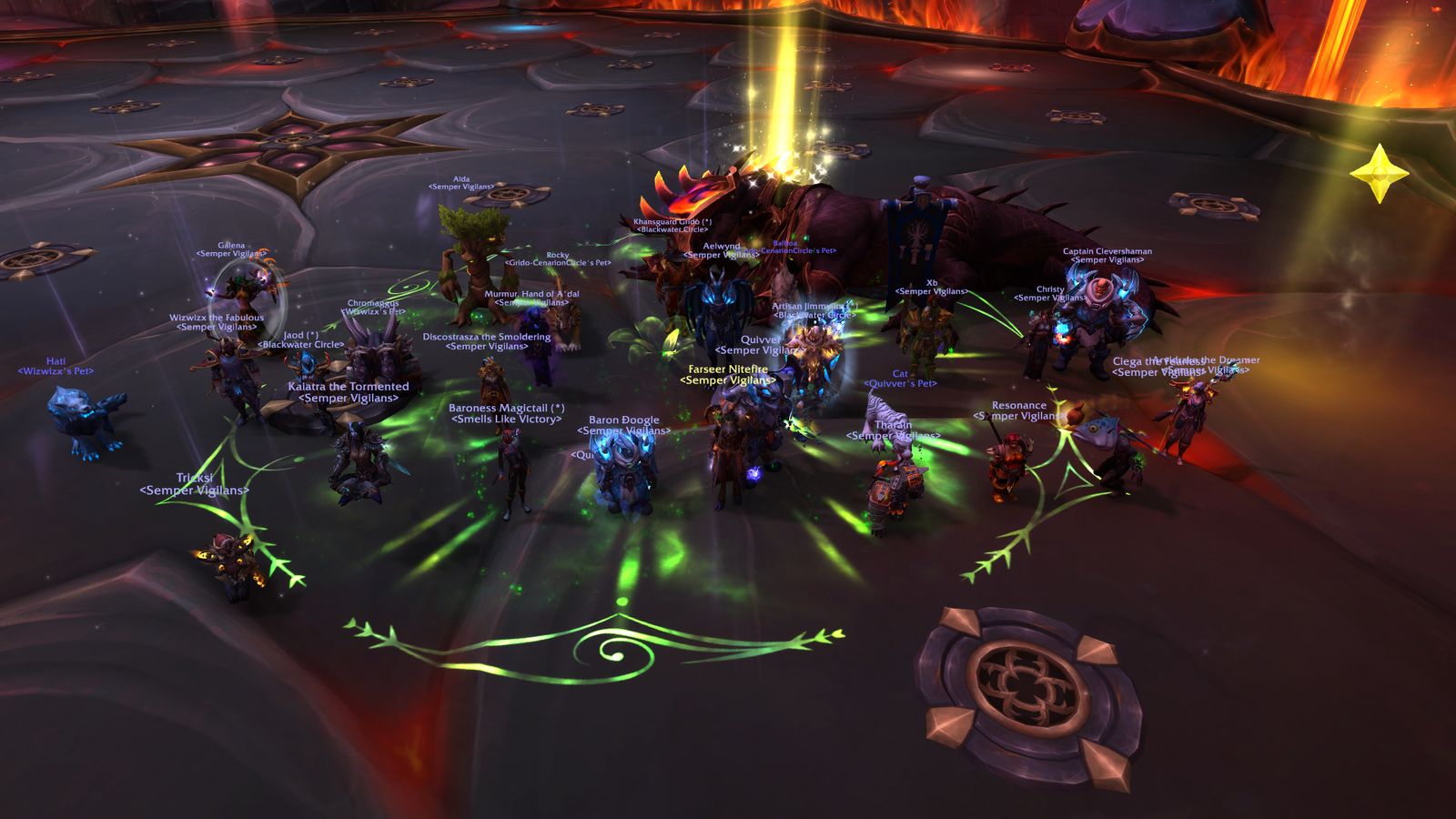
The success and longevity of established MMORPGs offer several useful lessons.
First, fictional worlds benefit from recognizable identities.
Players are more likely to remember locations, characters, and conflicts when they feel distinctive.
Second, long-term narratives need continuity.
New developments should build on earlier experiences without making the game inaccessible to newcomers.
Third, storytelling should complement gameplay rather than interrupt it unnecessarily.
Players need opportunities to participate, not merely observe.
Fourth, social systems matter.
Guilds, cooperative activities, and shared spaces help players create personal stories that strengthen their attachment to the game.
Finally, developers must maintain trust through consistent support, sensible progression systems, and respect for players’ time.
These principles do not guarantee success.
But they help explain why some MMORPGs become enduring virtual worlds while others struggle to maintain an audience after their initial launch excitement fades.
So, Can Storytelling Really Keep an MMORPG Alive Longer Than Gameplay?
The answer depends on what we mean by keeping a game alive.
If survival means maintaining active players, functioning communities, and sustainable operations, storytelling alone is not enough.
The game must continue offering enjoyable activities, reliable systems, and meaningful social opportunities.
But if survival also includes remaining culturally relevant, emotionally meaningful, and capable of attracting returning players, storytelling becomes enormously important.
Players may forget the precise mechanics of an old dungeon.
They may no longer remember which equipment offered the strongest statistics.
Yet they can still remember the characters they loved, the places they explored, and the friends they met along the way.
Those memories can survive long after individual gameplay systems have become outdated.
They can also motivate players to return when a familiar world offers something new.
In that sense, storytelling may preserve emotional attachment longer than any particular combat system.
But preserving affection for a world is not identical to sustaining a successful MMORPG.
The strongest games find ways to accomplish both.
Conclusion: Gameplay Keeps Players Busy, but Stories Give Them Reasons to Remember
Great storytelling can be one of the most powerful assets an MMORPG possesses.
It transforms fictional locations into meaningful places, powerful enemies into memorable characters, and ordinary progression into part of a larger journey.
World of Warcraft demonstrates the value of an established universe with recognizable characters and decades of accumulated history.
Final Fantasy XIV shows how long-running narrative development can encourage players to remain emotionally invested across expansions.
Ragnarok Online illustrates how atmosphere, music, and shared social experiences can create memories that endure even when gameplay systems become outdated.
Yet none of these examples proves that lore can replace good gameplay.
An MMORPG still needs satisfying activities, functioning systems, active communities, and developers who respect the players supporting it.
Storytelling provides emotional meaning.
Gameplay provides interaction.
Community transforms those interactions into shared experiences.
And trust gives players confidence that their investment of time matters.
The MMORPGs that survive are not necessarily those with the best stories or the best combat. They are the ones that successfully turn gameplay, storytelling, and community into a world players genuinely want to remain part of.
Years later, players may forget how much damage their favorite weapon dealt.
But they will remember the world where they used it, the friends who fought beside them, and the stories that made those adventures worth experiencing.
That is the kind of longevity no equipment upgrade can provide.