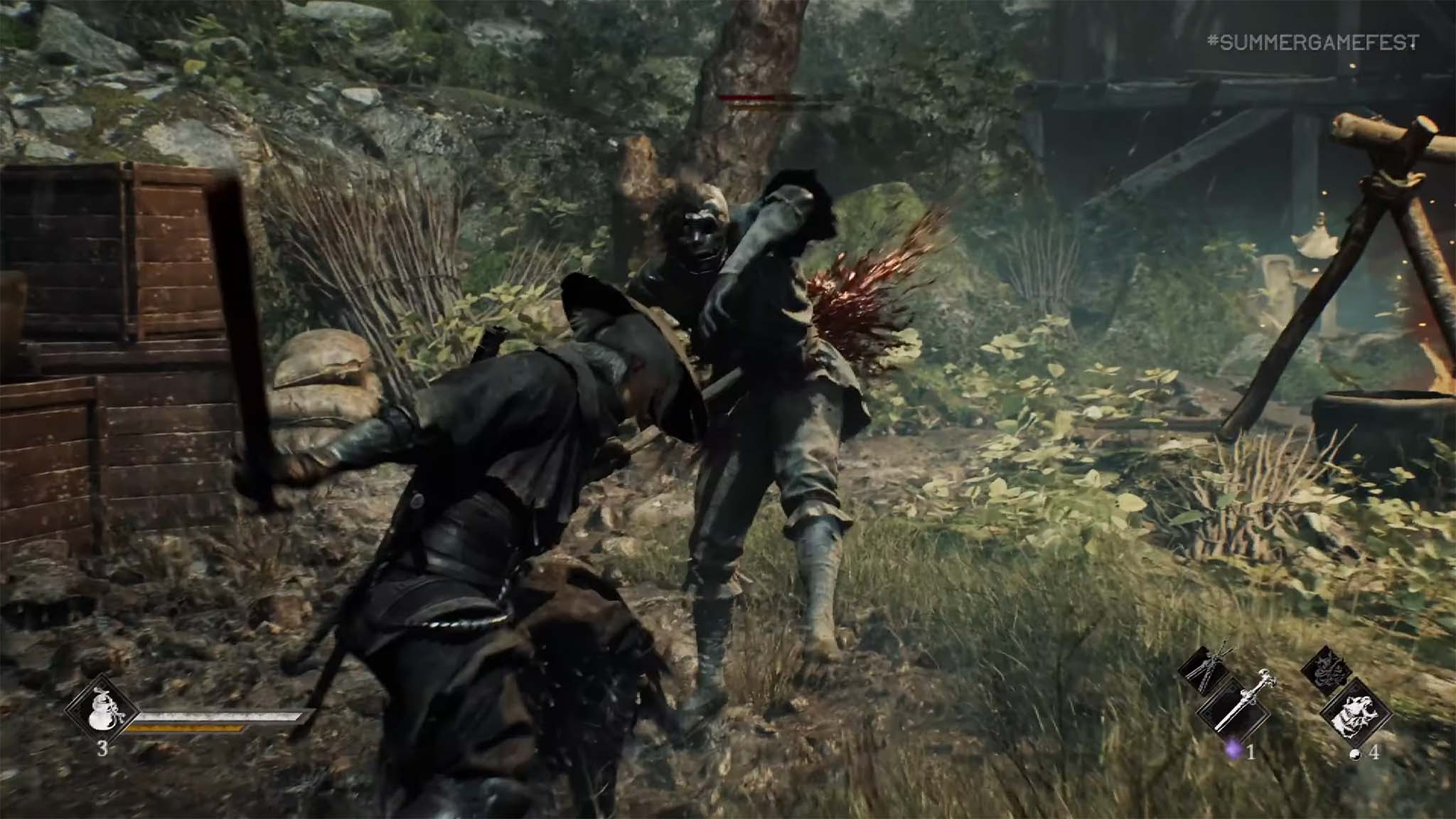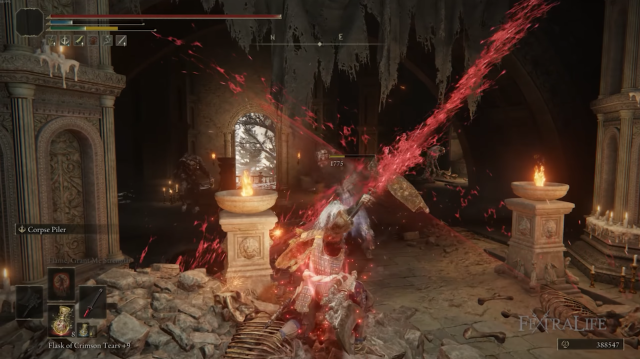

Both situations involve repetition, uncertainty, disappointment, and the hope of a better outcome. Yet the underlying processes are fundamentally different.
In Dark Souls, repeated failure can provide information that helps a player improve. In gambling, repeating a wager does not necessarily improve the probability of winning, and every additional bet can expose the player to further financial loss.
Understanding this distinction reveals something important about game design, player psychology, and the way human beings respond to setbacks.
Failure becomes rewarding when it helps us develop a skill. It becomes dangerous when we mistake repetition for progress in a system where the outcome remains governed by chance.
1. Why Losing Is Central to the Dark Souls Experience
Most video games try to make players feel capable. They introduce mechanics gradually, provide generous checkpoints, and often allow players to recover from mistakes without significant consequences.
Dark Souls takes a different approach.
Enemies can punish careless movement, healing at the wrong moment can be fatal, and unfamiliar bosses may defeat players before they fully understand what happened.
This difficulty is not simply an attempt to make the player suffer. It establishes a relationship between observation, experimentation, and mastery.
When a player dies to a boss, the encounter does not necessarily reset their knowledge. They may have learned how far a particular attack reaches, when the boss pauses between combinations, or which direction is safest for a dodge.
The character returns to a checkpoint, but the player returns with new information.
That difference is the foundation of the Souls experience.
2. Death Is a Reset of the Character, Not the Player
One of the cleverest aspects of Dark Souls is the separation between character progress and player progress.
Character progress includes levels, equipment, consumables, and resources. These are measurable systems that the game tracks.
Player progress is different. It includes timing, recognition, patience, and familiarity with enemy behavior.
A boss can eliminate the character’s health bar, but it cannot erase the player’s understanding of the fight.
Consider a player who initially struggles to recognize an enemy’s delayed overhead attack. After several attempts, they begin to notice the animation. Eventually, they learn to wait rather than dodge immediately.
Even if that attempt ends in defeat, something meaningful has changed.
The player is becoming more capable.
In a well-designed encounter, that improvement can eventually produce a more consistent result.
3. Why the Same Boss Feels Different After Ten Attempts
A difficult boss often appears chaotic during the first encounter.
The player does not know its attack range, movement patterns, or opportunities for retaliation. Every animation feels threatening because its meaning is unclear.
After several attempts, the same encounter can begin to feel more predictable.
Attacks that once seemed instantaneous become recognizable. Openings that were previously invisible become easier to identify.
The boss has not necessarily become weaker.
The player has developed a better mental model of the encounter.
This is why repeated attempts can feel productive even when they end in failure.
The player can recognize changes in their own performance before achieving victory.
4. Failure Becomes Useful When It Provides Feedback
Not every difficult game makes failure rewarding.
For failure to become a learning experience, players need some way to understand what went wrong.
Dark Souls frequently communicates danger through animations, positioning, sound, and enemy behavior.
A player who attacks too many times may be punished during recovery frames. Someone who dodges too early may be struck by a delayed attack. A player who heals at the wrong distance may discover that the boss can close the gap.
These mistakes can provide actionable feedback.
The next attempt becomes an opportunity to test a revised approach.
However, not every death is equally informative. Camera problems, confusing hitboxes, or unfamiliar mechanics can sometimes make an encounter feel unfair.
The important distinction is whether repeated attempts offer a reasonable path toward better understanding.
5. The Difference Between Randomness and Uncertainty
Players often describe difficult boss fights as unpredictable, but unpredictability is not always the same as randomness.
A boss may have several possible attacks. The player might not know which one will come next.
However, those attacks still follow rules involving animation, range, recovery, and timing.
Learning those rules can improve the player’s response.
Gambling outcomes operate differently.
In a properly functioning game of chance with independent rounds, knowing the previous outcomes does not allow a player to predict the next random result reliably.
A player may become more familiar with the rules of the game, but familiarity does not automatically turn a negative-expectation wager into a profitable one.
This distinction matters because both systems can create uncertainty, yet only one necessarily offers a meaningful path to overcoming that uncertainty through mechanical skill.
6. Why a Dark Souls Player Can Actually Improve Their Odds
Suppose a player faces a boss that repeatedly defeats them because they fail to recognize a particular attack.
After practicing, they learn to identify the animation and dodge consistently.
Their chance of surviving that attack improves because their behavior has changed.
They may also improve their equipment, adjust their build, or discover a safer strategy.
These changes can affect the outcome of future attempts.
Not every boss follows a completely predictable pattern, and chance can still influence individual encounters. Nevertheless, player decisions have a substantial role in determining success.
In a random wagering system, repeatedly losing does not by itself create a comparable improvement.
A person cannot make an independent random result more favorable simply by having experienced enough unfavorable outcomes.
7. Why Gambling Losses Can Create a False Sense of Progress
Imagine someone losing five consecutive rounds of a game of chance.
They might begin to believe that a win is becoming more likely because they have already experienced so many losses.
This is related to the gambler’s fallacy: the mistaken belief that past independent random outcomes must be balanced by future outcomes.
If the probability of winning remains unchanged between independent rounds, a losing streak does not make the next round inherently more favorable.
The player may feel that they have endured enough failure to deserve a reward.
But random systems do not respond to effort, frustration, or perceived fairness.
Unlike learning a boss’s attack patterns, accumulating losses is not evidence that someone is approaching a winning result.
8. Why the Feeling of Being Close Can Be Misleading
Dark Souls often creates dramatic near-victories.
A boss may have only a tiny amount of health remaining when the player dies.
That moment can be frustrating, but it may also provide useful information.
The player has demonstrated that their strategy can bring the encounter close to completion.
They may only need to improve their final decisions or maintain concentration for slightly longer.
Gambling can also create near-miss experiences, but the meaning is different.
A visual outcome that appears close to a prize does not necessarily indicate that the player is becoming more likely to win.
The sensation of proximity can be psychologically powerful even when it provides no useful predictive information.
9. Why a Boss at One Percent Health Is Not the Same as Almost Winning a Bet
Consider two scenarios.
In the first, a Dark Souls player reduces a boss to one percent health before dying.
In the second, someone sees a gambling result that visually resembles a winning combination but does not qualify for a payout.
Both experiences may create the thought, “I was so close.”
Yet the information they provide is not equivalent.
The Dark Souls player has direct evidence that their actions can reduce the boss’s health to a particular point.
They can examine how the final mistake occurred and change their approach.
In a chance-based game, a near-miss may not improve the probability of success on the next independent round.
A related Indonesian-language analysis of losing repeatedly in Dark Souls compared with losing at slot gambling explores this contrast between skill-based setbacks and financial risk.
The essential lesson is that feeling close to success is not the same as making measurable progress toward it.
10. Dark Souls Rewards Adaptation, Not Just Persistence
It is tempting to describe the Souls formula as a lesson in never giving up.
That interpretation is incomplete.
Simply repeating the same mistake indefinitely is not necessarily productive.
A player who keeps attacking during an unsafe opening may continue dying regardless of how determined they feel.
Progress usually requires some form of adaptation.
They might change their timing, use a different weapon, reduce equipment load, or approach the boss more patiently.
The rewarding part is not suffering through an arbitrary number of attempts.
It is recognizing a problem, testing a solution, and seeing improvement.
Persistence becomes valuable when it is connected to learning.
11. The Danger of Treating Every Loss as a Reason to Continue
One of the most misleading lessons someone could take from difficult video games is that quitting is always a failure.
In Dark Souls, taking a break can be a perfectly reasonable decision.
A tired or frustrated player may make more mistakes, and returning later can improve concentration.
In gambling, the stakes can be much more serious because continuing may involve spending additional money.
Someone who believes they must keep playing until they recover their losses can enter a cycle known as chasing losses.
The desire to undo a previous outcome becomes the motivation for taking another financial risk.
Unlike a boss encounter, there is no guarantee that another attempt brings the person closer to recovering what was lost.
Recognizing when to stop is a skill in both contexts, but the consequences of failing to stop can be very different.
12. Why Dark Souls Victories Feel Earned
The satisfaction of defeating a difficult boss often comes from recognizing a connection between effort and achievement.
A player remembers the moment they learned to dodge an attack or discovered a safer opening.
They can identify specific decisions that contributed to victory.
This creates a sense of competence.
The achievement feels meaningful because the player understands how their actions influenced the result.
That does not mean every victory is entirely skill-based. Equipment, luck, enemy behavior, and outside assistance can also matter.
But the player’s growing competence remains an important part of the experience.
13. Why Winning Money Can Feel Rewarding for Different Reasons
A gambling win can also create excitement and satisfaction.
However, the source of that satisfaction may differ from overcoming a difficult boss.
Financial rewards can feel valuable because they increase available money or appear to reverse previous losses.
The uncertainty surrounding the outcome may also intensify anticipation.
Yet a win does not necessarily demonstrate that the person has developed a new skill.
In chance-dominated gambling, someone may receive a favorable outcome without changing their approach at all.
This makes it important not to confuse a positive result with evidence of good decision-making.
A risky decision can sometimes produce a favorable outcome, just as a reasonable decision can sometimes produce an unfavorable one.
14. The Role of Agency in Difficult Games
Agency refers to the player’s ability to influence what happens through their choices and actions.
Dark Souls gives players several forms of agency.
They can select weapons, adjust equipment, choose when to attack, explore alternative routes, and learn enemy behavior.
These decisions do not guarantee success, but they can meaningfully influence the outcome.
The relationship between choice and consequence helps players understand why they succeeded or failed.
In gambling, the degree of agency varies by activity.
Some games include meaningful decisions, while others are dominated by chance. Even where skill exists, the financial risks and rules of the game still matter.
The important question is not whether a system includes any choices at all, but how much those choices can actually influence long-term outcomes.
15. Why Sekiro Makes the Learning Process Even More Obvious
Sekiro: Shadows Die Twice provides another useful example of learning through repeated failure.
Its combat system places considerable emphasis on deflection timing, posture management, and reading enemy attacks.
Players who initially struggle against a boss may eventually learn its rhythm.
An encounter that once seemed overwhelming can become manageable when the player understands when to deflect, counter, or reposition.
This is especially noticeable because Sekiro offers fewer opportunities to solve every problem simply by changing to a radically different character build.
The player’s understanding of combat mechanics becomes central to progress.
That makes the relationship between failure and skill development particularly visible.
16. Elden Ring Shows That Learning Can Take Different Forms
Elden Ring expands the ways players can respond to difficulty.
A player struggling with a boss might practice its moveset, explore another region, upgrade equipment, summon assistance, or experiment with a different build.
These options demonstrate that improvement is not limited to faster reflexes.
Sometimes the most effective response to failure is changing the strategy rather than executing the same strategy more precisely.
The player remains involved in a system where preparation and decisions can meaningfully alter the challenge.
This flexibility also makes Elden Ring an interesting example of how difficult games can reward curiosity and experimentation.
17. Why Random Rewards in Video Games Complicate the Comparison
Not every video game is entirely skill-based.
Many RPGs include random loot drops, critical-hit probabilities, procedural elements, or uncertain rewards.
Some games also sell randomized rewards through loot boxes or gacha systems.
These mechanics introduce elements of chance into the gaming experience.
However, the presence of randomness does not automatically make every game equivalent to gambling.
Relevant differences include whether real money is risked, whether prizes can be converted into money, how the system is regulated, and how much player skill influences the outcome.
A careful comparison must examine the actual mechanics rather than treating all random rewards as identical.
18. Why Gacha Pity Systems Are Different from Learning a Boss
Some gacha games use pity systems that change reward probabilities or guarantee certain rewards after a specified number of attempts.
These systems differ from independent random rounds because previous pulls can affect future reward conditions.
However, pity systems still do not turn repeated spending into skill development.
A player may understand the probability structure more accurately, but the underlying reward remains determined by the system’s rules rather than mechanical mastery.
Players also need to consider the total cost of reaching a guarantee.
Knowing that a reward will eventually be guaranteed does not automatically make the spending financially worthwhile.
The comparison with Dark Souls becomes clearer when we distinguish learning a mechanic from accumulating attempts toward a programmed reward threshold.
19. Why Time and Money Change the Meaning of Failure
Every hobby has costs.
Playing Dark Souls requires time, attention, and access to the game. Excessive play can interfere with sleep, work, or other responsibilities.
However, dying to a boss in a game already purchased does not ordinarily require the player to pay real money for another attempt.
Gambling commonly involves staking money or something of monetary value on uncertain outcomes.
Repeated losses can therefore create accumulating financial consequences.
This difference changes the stakes of persistence.
Spending another hour practicing a boss and spending another sum of money trying to recover a gambling loss are not interchangeable decisions.
Both deserve thoughtful limits, but their risks are not the same.
20. Why Sunk Costs Influence Both Gamers and Gamblers
The sunk cost fallacy occurs when people allow resources already spent to justify continuing an activity, even when stopping would be the better decision.
A Dark Souls player may think, “I’ve already spent three hours on this boss, so I cannot stop now.”
A gambler may think, “I’ve already lost this much money, so I have to keep going until I recover it.”
The reasoning has a similar structure, but the consequences can be dramatically different.
In both cases, previous effort or spending cannot be recovered merely by continuing.
The better question is whether another attempt is worthwhile based on the present situation.
For a gamer, that may mean considering enjoyment, fatigue, and available time.
For someone gambling, it also means recognizing the possibility of additional financial harm.
21. Why Frustration Can Be Productive but Also Destructive
Frustration is not always a sign that a game has failed.
Moderate frustration can encourage players to reconsider their approach and develop new skills.
However, frustration becomes less useful when it overwhelms attention or leads to impulsive decisions.
A player who becomes angry after repeated deaths may start attacking recklessly, skipping observation, and ignoring patterns they previously understood.
At that point, more attempts may produce less learning.
The same general problem appears in many decision-making environments: strong emotions can make it harder to evaluate risk carefully.
Recognizing emotional fatigue and taking a break can therefore be part of effective play.
22. The Difference Between a Fair Challenge and an Exploitative Loop
Difficulty alone does not make a game rewarding.
A well-designed challenge gives players understandable rules and opportunities to improve.
Players may still disagree about whether a particular boss is fair, but the central design goal is usually to create a challenge that can be overcome.
Monetization systems can pursue different goals.
Some are designed to sell optional content transparently. Others may use urgency, confusing currencies, or repeated randomized purchases to encourage spending.
These designs should be evaluated by how clearly they communicate costs and probabilities, and whether they respect the player’s ability to make informed decisions.
The key issue is not whether a system creates excitement.
It is whether that excitement is paired with meaningful control and transparent consequences.
23. Why Learning Is More Valuable Than Simply Winning

learning and improvement, while chance-based gambling
losses do not necessarily bring players closer to winning.
Image source: Patch.com.
A player can defeat a Dark Souls boss without fully understanding the encounter.
Perhaps the boss used a favorable sequence of attacks, or a particular strategy happened to work unusually well.
That victory still counts, but it may not represent the same level of mastery as a consistent performance.
Likewise, a player can lose an encounter while demonstrating substantial improvement.
They may survive longer, make fewer mistakes, or recognize attacks more reliably.
Evaluating progress only through victory and defeat misses these important details.
The most meaningful measure of learning is whether the player has developed skills that can be applied again.
24. Why Gambling Outcomes Should Not Be Treated as Personal Skill Ratings
People naturally look for explanations when they win or lose.
After a favorable outcome, someone may credit their intuition or strategy. After an unfavorable one, they may blame timing or bad luck.
In chance-dominated systems, this can create an exaggerated sense of personal control.
A sequence of wins does not necessarily demonstrate superior skill, and a sequence of losses does not necessarily indicate that success is becoming overdue.
Evaluating gambling decisions requires understanding the rules, probabilities, and financial exposure rather than relying on short-term results.
That differs from a boss encounter where repeated practice can directly improve execution.
25. What Dark Souls Can Actually Teach About Persistence
Dark Souls can encourage patience, experimentation, and the willingness to learn from mistakes.
But the most useful lesson is not that players should continue indefinitely.
It is that setbacks can become valuable when they reveal something that can be improved.
A failed attempt may show that a dodge was mistimed, a weapon was unsuitable, or a strategy was too aggressive.
The player can then make a specific adjustment.
Persistence without adaptation is not necessarily progress.
And persistence in an activity involving financial risk should never be justified simply by comparing it to overcoming a difficult video game.
26. When Should a Dark Souls Player Take a Break?
There is no universal number of attempts after which a player should stop.
However, certain signs suggest that a break may be useful.
These include repeated careless mistakes, declining concentration, growing anger, and a sense that the game is no longer enjoyable.
A short break can allow the player to return with greater patience.
Sometimes, leaving a boss unfinished for the evening is the most sensible decision.
The game will still be there later.
Progress does not require turning every session into a test of endurance.
27. Why Responsible Limits Matter More When Money Is Involved
When real money is at risk, the consequences of continuing can extend beyond entertainment.
Losses can affect savings, bills, relationships, and emotional well-being.
Trying to recover previous losses by placing additional wagers can increase that exposure.
People who gamble should understand that money already lost is not made more recoverable by continuing.
If gambling is causing financial strain, secrecy, distress, or difficulty stopping, seeking support and using available gambling-blocking or self-exclusion tools can be important steps.
For someone experiencing gambling-related harm, stopping and getting appropriate assistance matters more than finding a new betting strategy.
28. Can Game Designers Learn from Dark Souls Without Copying Its Difficulty?
The strongest lesson from Dark Souls is not that every game should be punishing.
It is that players benefit when challenges provide clear relationships between action and consequence.
A puzzle game can reward experimentation without requiring difficult combat.
A strategy game can encourage learning through understandable feedback.
A platformer can make failure useful by giving players precise information about movement and timing.
Different genres can support mastery in different ways.
The design principle is to help players understand why something happened and what they might do differently.
29. Why the Best Victories Change the Player
When someone finally defeats a difficult Dark Souls boss, the most valuable reward may not be the souls, equipment, or achievement notification.
It may be the knowledge that they can now perform something they previously could not.
The player has developed better timing, stronger recognition, or greater patience.
That improvement remains meaningful beyond the specific encounter.
It can influence how they approach future bosses and other difficult games.
This is the difference between receiving a reward and developing an ability.
Both can feel satisfying, but only one necessarily represents a change in the player’s competence.
30. Why We Should Be Careful When Comparing Gaming and Gambling
It would be inaccurate to claim that all video games are harmless or that every gambling activity operates in exactly the same way.
Games can involve excessive spending, unhealthy time commitments, and monetization systems that encourage impulsive behavior.
Gambling activities also differ in their rules, skill components, and regulatory treatment.
Nevertheless, the comparison between a Souls boss and chance-based wagering highlights a meaningful distinction.
In Dark Souls, players can often improve their future performance by learning and changing their behavior.
In an independent game of chance, previous losses do not create an obligation for the system to deliver a favorable result.
Understanding that difference helps prevent the motivational language of difficult gaming from being misapplied to financial risk.
Conclusion: Failure Is Rewarding When It Leads Somewhere
Dark Souls has earned its reputation for difficult encounters, memorable bosses, and demanding combat.
Yet the series’ lasting appeal is not simply that players die frequently.
Its appeal comes from the relationship between failure, feedback, and improvement.
A player can lose repeatedly while gradually becoming more capable. When victory finally arrives, it can feel like the result of something they have learned.
Gambling losses do not necessarily work that way.
Repeated wagers can create the emotional impression that success is approaching, even when the underlying probabilities have not become more favorable.
And because real money may be involved, continued attempts can create consequences that extend well beyond entertainment.
The important lesson is not that losing is good or bad. It is that we should understand what a loss actually teaches us, whether our next decision can improve the outcome, and what continuing will cost.
Dark Souls rewards players for becoming better at the game.
That is very different from believing that enough losses will eventually make chance work in our favor.
For more gaming features, guides, and analysis of the mechanics that shape how we play, explore GuideFall.com.