
The moment can feel disproportionately exciting. After hours of ordinary rewards, one item makes the previous effort seem worthwhile.
But why?
The item is ultimately a collection of digital properties stored by a game. Its value depends on rules that exist inside a fictional world. Yet the excitement it creates can feel remarkably real.
The answer involves more than simple randomness. Rare loot connects several powerful elements of human psychology: anticipation, uncertainty, learning, memory, perceived value, and the satisfaction of improving a character.
Diablo is particularly interesting because it combines randomized rewards with meaningful decisions. Players can improve their builds, choose efficient farming activities, and learn how loot systems work, even though they cannot directly command a specific random item to appear.
Understanding the psychology of rare drops helps explain why loot-driven games remain compelling long after their campaigns have ended.
1. Diablo Is Built Around the Promise of Something Better
The basic structure of Diablo is straightforward. Players defeat enemies, collect equipment, become stronger, and challenge increasingly demanding content.
Yet the relationship between combat and rewards is what gives the series much of its long-term appeal.
A sword is not simply a sword. It might have a better damage range, an unusual modifier, a valuable affix combination, or a property that changes how a character plays.
Each encounter offers the possibility of finding something useful.
Most encounters will not deliver a remarkable item. That is precisely why exceptional drops can stand out.
The contrast between ordinary rewards and rare discoveries creates a rhythm of expectation that encourages players to continue exploring.
2. Why Predictable Rewards Feel Different From Random Drops
Imagine two reward systems.
In the first, players defeat a boss ten times and receive a guaranteed item on the tenth victory.
In the second, the same item has a chance to appear after each defeat, but the exact moment is uncertain.
Both systems can motivate repeated play, yet they create different emotional experiences.
The guaranteed reward provides a clear sense of progression. Every completed attempt moves the player closer to a known goal.
The random reward introduces uncertainty. The desired item might appear immediately, after many attempts, or not during the current session at all.
That uncertainty can make each attempt feel potentially significant.
However, uncertainty does not automatically make a system enjoyable. If rewards feel excessively inaccessible or the activity becomes repetitive, the same mechanic can produce frustration.
3. The Difference Between Wanting a Reward and Receiving It
One reason loot systems are fascinating is that anticipation and satisfaction are not identical experiences.
Players may feel excitement before identifying a rare item, opening a reward cache, or defeating a boss known for valuable drops.
That anticipation can be enjoyable independently of the final reward.
When an item finally appears, the emotional response depends on whether it matches the player’s expectations.
A legendary item that does not suit the character’s build might be disappointing. A less visually impressive item with exceptionally useful properties might be far more exciting.
The reward is therefore evaluated through personal goals rather than rarity alone.
4. What Dopamine Actually Has to Do With Loot
Discussions about video game rewards frequently mention dopamine, sometimes in misleading ways.
Dopamine is involved in several brain processes, including motivation, learning, and the processing of reward-related information.
It is not simply a chemical that produces happiness whenever something exciting happens.
Research into reward learning has shown that differences between expected and actual outcomes can play an important role in how people update their expectations.
In a loot-driven game, an unexpectedly valuable item can be especially memorable because the result exceeds what the player anticipated.
However, it would be inaccurate to claim that every legendary drop produces the same neurological response in every player.
Individual expectations, experience, emotional state, and the meaning attached to the item all influence the experience.
5. Why the First Legendary Drop Often Feels Special
Many players remember their first remarkable item more vividly than dozens of later rewards.
In Diablo II, the first valuable Unique or high rune can feel like a major milestone.
In Diablo III, a legendary item obtained during early progression may dramatically change the player’s perception of what their character can accomplish.
In Diablo IV, finding an item that enables a previously unavailable build can create a similar moment.
These early discoveries often combine surprise with a meaningful change in gameplay.
Later, when players become accustomed to receiving higher-tier equipment, the same visual presentation may no longer create the same excitement.
Rarity is experienced relative to expectations.
6. Diablo II and the Lasting Appeal of High Runes
Diablo II provides one of the clearest examples of how rarity can create enduring player memories.
High runes are valuable because they can contribute to powerful runewords and other important character-building goals.
Finding a rare rune can feel significant even to players who have spent years with the game.
But the excitement does not come from rarity alone.
The rune may represent access to a desired runeword, a major upgrade, or trading value in an economy where trading is available.
Its significance comes from what the player can do with it.
A rare item without a meaningful use may be interesting for a moment. A rare item that unlocks a long-term goal can become the highlight of an entire season.
7. Why Players Remember One Great Drop and Forget Hundreds of Ordinary Runs
Human memory does not preserve every experience with equal detail.
Unusual, emotionally significant, or surprising events often become more memorable than repetitive everyday experiences.
This helps explain why players can vividly recall the moment a valuable item dropped while remembering very little about the dozens of unsuccessful runs surrounding it.
Those ordinary attempts may blend together because they share similar environments, enemies, and outcomes.
The exceptional drop breaks that pattern.
A comparable question appears in research and discussion about gambling psychology: why can a particularly rewarding outcome remain prominent in memory while numerous disappointing outcomes fade into the background?
An Indonesian-language discussion of why the brain can struggle to forget a gambling win provides a related perspective on reward memories and the way emotionally powerful outcomes can influence expectations.
The contexts are not identical, but the comparison illustrates an important point: remembering an exceptional reward does not necessarily mean it was a typical result.
8. Selective Memory Can Make Rare Drops Seem More Common
Suppose a player completes one hundred farming runs.
Ninety-eight produce unremarkable equipment, one produces a moderately useful item, and one produces an exceptional reward.
Months later, the player may primarily remember the exceptional item.
They might tell friends about the lucky drop without mentioning how much ordinary farming preceded it.
This is understandable. Memorable experiences naturally dominate stories.
However, it can create distorted expectations for other players.
Someone hearing only the success story may underestimate how much time was involved.
That is why personal anecdotes are poor substitutes for reliable drop-rate information.
9. Why Screenshots of Rare Items Spread So Easily
Gaming communities often celebrate rare drops through screenshots, videos, and social media posts.
A player who discovers an exceptional item may share the moment on Reddit, Discord, or a community forum.
Other players respond with congratulations, surprise, or stories about their own attempts.
This social attention increases the emotional value of the discovery.
The reward becomes more than a gameplay upgrade. It becomes a moment of recognition within the community.
Yet public posts are also selective.
Players are more likely to share extraordinary outcomes than ordinary runs that produce nothing notable.
Consequently, a community feed filled with rare drops can make extraordinary luck appear more frequent than it really is.
10. The Importance of Item Identity in Diablo II
Diablo II has a distinctive relationship with item identity.
Specific Uniques, sets, runes, and valuable item bases carry recognizable names and associations.
Players may remember not only the statistical properties of an item but also where they found it and which character benefited from it.
An item can become part of the player’s personal history.
This is particularly true when the item supports a build they have wanted to create for a long time.
The item is no longer just equipment.
It represents an achieved goal.
11. Why Item Identification Creates Suspense
Unidentified equipment adds another layer of anticipation.
Players may recognize an item’s general category or rarity before knowing its exact properties.
That delay creates a brief gap between discovery and evaluation.
The player knows something potentially valuable has appeared, but not whether it will meet their needs.
When the properties are finally revealed, the result can produce excitement or disappointment.
This sequence demonstrates how presentation influences reward psychology.
The game is not merely distributing an item. It is creating a moment in which the player imagines several possible outcomes before learning which one occurred.
12. Diablo III Changed the Meaning of Legendary Loot
Diablo III evolved substantially through its updates and expansion.
Its loot systems increasingly emphasized character-relevant rewards and powerful item effects.
Legendary items became important not only because they were rare, but because their special properties could support specific skills and builds.
For many players, the interesting question changed from whether a legendary would appear to whether it would be the right legendary with the right properties.
This distinction matters.
As access to a reward category becomes more common, players can shift their attention toward quality, optimization, and particular combinations of attributes.
Rarity becomes relative to the stage of progression.
13. Why a Perfect Roll Can Be More Exciting Than a Rare Name
Experienced action RPG players often evaluate equipment through a combination of rarity and usefulness.
An item with a recognizable name may still have disappointing attributes.
Meanwhile, another item with the right combination of affixes can dramatically improve performance.
This creates multiple layers of uncertainty.
First, the desired item must appear.
Second, its properties must suit the intended build.
Third, its numerical values may need to fall within a favorable range.
The result is a progression system where acquiring an item does not always complete the player’s goal.
That complexity can sustain long-term interest, but it can also make the pursuit of perfection feel endless.
14. Diablo IV and the Psychology of Build-Defining Uniques
Diablo IV continues the tradition of connecting equipment to character identity.
Some Unique items introduce properties that can significantly change how a skill or build functions.
For a player pursuing a specific character concept, obtaining the correct item can feel like unlocking a new way to play.
The reward therefore has practical and emotional value.
It improves the character while confirming that the player’s long-term goal is becoming achievable.
However, Diablo IV’s systems have changed across updates and seasons.
Drop sources, item categories, crafting options, and progression strategies should always be evaluated according to the version being played.
Psychologically, the central principle remains consistent: the more meaningful an item is to a player’s goals, the more significant its discovery can feel.
15. Why Target Farming Feels Better Than Purely Blind Farming
Players generally appreciate having some influence over how they pursue a desired reward.
Target farming allows them to select activities associated with particular items or reward categories.
Even when the final drop remains random, choosing an appropriate activity provides a sense of direction.
Players can compare efficiency, difficulty, and available resources.
This introduces a strategic component to the farming process.
Importantly, strategic farming does not mean that a specific drop is guaranteed unless the game explicitly provides such a guarantee.
It means the player can make more informed choices about where and how to spend their time.
16. The Difference Between Farming Efficiently and Controlling RNG
There is a meaningful distinction between improving farming efficiency and controlling individual random outcomes.
A player might optimize a character to complete a dungeon in five minutes instead of ten.
That improvement allows more attempts within the same amount of time.
Depending on the game’s loot rules, additional attempts can increase the cumulative opportunity to obtain a reward.
However, the player has not necessarily changed the probability of a specific item appearing on each individual attempt.
They have changed the number of opportunities available.
Understanding this difference prevents players from confusing preparation with direct control over randomness.
17. Why the Gambler’s Fallacy Can Appear in Loot Farming
After many unsuccessful farming runs, a player may believe that a rare item is finally due to appear.
That belief can be mistaken when each drop is independently determined by the same probability.
If an item has a fixed chance of dropping on each independent attempt, previous failures do not make the next attempt more likely to succeed.
Of course, not every game uses independent probabilities.
Some games implement pity systems, guaranteed rewards, or mechanics that change probabilities after certain conditions are met.
Players should distinguish between documented game mechanics and assumptions based on a losing streak.
Without a relevant system that changes the odds, repeated failure does not mean that a reward has become overdue.
18. Why Rare Drops Can Make Ordinary Gameplay Feel Meaningful
One of the strengths of a loot-driven game is that ordinary combat can carry long-term significance.
A familiar dungeon may still offer the possibility of a valuable discovery.
This gives players a reason to revisit content after they understand its mechanics.
For some players, farming also becomes a relaxing routine.
They enjoy refining their build, clearing enemies efficiently, listening to music, or chatting with friends while playing.
The rare drop is an exciting possibility, but not necessarily the only reason they participate.
This is an important distinction when evaluating whether a reward system is enjoyable or merely repetitive.
19. When the Journey Matters More Than the Drop
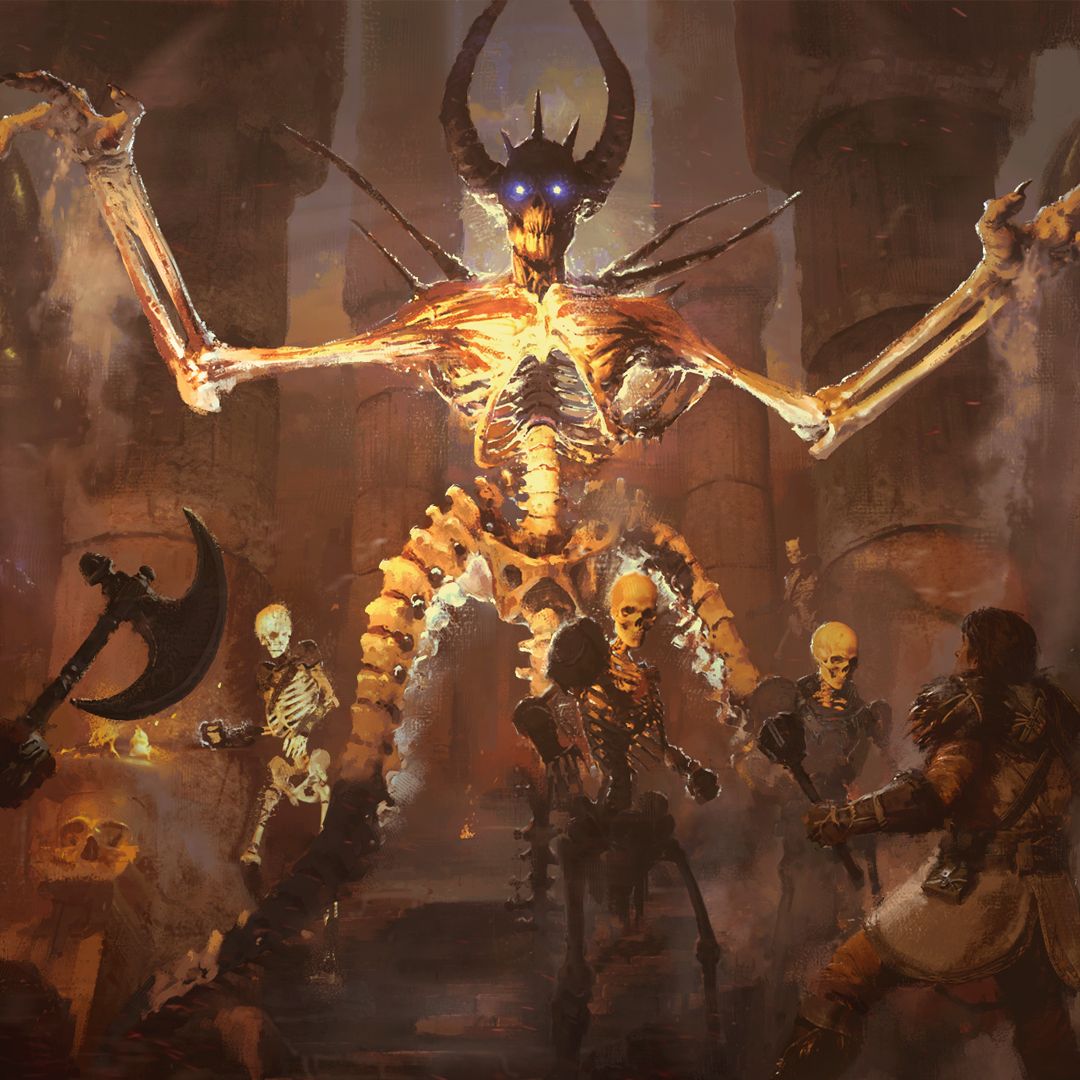
unpredictable rewards, character progression, and the excitement
of discovering valuable equipment.
Image source: Future Publishing / Future CDN.
Not every farming session needs to produce a valuable item to feel worthwhile.
A player may improve their combat technique, experiment with a new build, or learn a more efficient route.
They may also enjoy cooperative play with friends.
These experiences create value independently of random rewards.
A healthy relationship with loot farming is easier to maintain when enjoyment does not depend entirely on receiving a particular item.
If every unsuccessful session feels like wasted time, the reward system may be overshadowing the game itself.
20. Why Trading Changes the Emotional Value of Loot
In games that support trading, rare equipment can have value beyond the character who discovers it.
A player may obtain an item they cannot use but which another player wants.
That item can become a way to acquire equipment better suited to their own goals.
Trading adds an economic layer to the reward system.
It can make a broader range of drops feel worthwhile because usefulness is no longer limited to immediate personal use.
However, trading economies can also introduce speculation, price fluctuations, scams, and disputes over value.
Players should understand the game’s trading rules and avoid unauthorized transactions that expose accounts or personal information to unnecessary risks.
21. Why Seasonal Resets Can Restore the Excitement of Loot
Seasonal structures are common in modern action RPGs.
They provide an opportunity to start new characters, explore updated mechanics, and pursue progression under a fresh set of conditions.
One psychological effect is that previously ordinary rewards can become meaningful again.
An item that would be ignored by a fully developed character may be extremely useful during early seasonal progression.
The player’s expectations reset along with their progression.
This can restore the excitement of discovery without requiring every reward to become more powerful indefinitely.
However, seasonal resets are not universally appealing. Some players prefer persistent characters and dislike repeating familiar tasks.
22. Why Loot Sounds and Visual Effects Matter
Rare item drops are often accompanied by distinctive sounds, colors, animations, or interface notifications.
These presentation choices help players recognize that something unusual has happened.
They also make the event easier to remember.
A familiar sound can become associated with anticipation because players have repeatedly encountered it alongside valuable rewards.
Over time, the presentation itself can become part of the emotional experience.
Good visual and audio design makes important information noticeable.
But developers should also be mindful that attention-grabbing reward effects can encourage repetitive engagement, particularly when combined with paid randomized mechanics.
23. The Problem With Endless Item Optimization
Loot systems can create goals that continually move further away.
After obtaining a desired item, the player may begin searching for a better version.
After finding that version, they may want a more favorable combination of attributes.
Eventually, small statistical improvements can require substantial additional time.
For some players, this optimization is enjoyable. They appreciate the mathematics and long-term planning involved.
For others, it becomes exhausting.
The distinction depends on whether the process remains personally rewarding or begins to feel like an obligation.
24. Why Rare Loot Is Not Automatically Equivalent to Gambling
Both loot systems and gambling can involve uncertain rewards.
However, uncertainty alone is not sufficient to make two activities identical.
Farming enemies in a game already purchased may involve time and gameplay effort without requiring a real-money stake for each attempt.
Gambling typically involves risking money or something of monetary value on an uncertain outcome.
Paid loot boxes, tradable virtual items, and other monetization arrangements can complicate the distinction.
Legal classifications also vary by jurisdiction and by the details of the system.
A useful analysis therefore considers how rewards are obtained, whether money is risked, whether rewards have monetary value, and whether players can meaningfully influence outcomes.
It is more accurate to compare specific mechanics than to claim that every random item drop is gambling.
25. Why Spending Real Money Can Change the Psychology of Random Rewards
Randomized rewards can feel different when each attempt requires additional spending.
A player farming an item through ordinary gameplay may decide to stop because they are tired or want to play something else.
When money is involved, unsuccessful attempts can create pressure to justify earlier purchases.
Someone may believe that spending more is necessary to make previous spending worthwhile.
This is closely related to sunk-cost reasoning.
Past spending cannot be recovered simply by continuing to spend.
Players should evaluate each new purchase independently, understand the costs involved, and avoid treating a desired digital reward as something they must obtain regardless of expense.
26. Why Developers Need to Balance Rarity and Accessibility
If valuable items are too common, they may stop feeling exceptional.
If they are too rare, players may become discouraged before experiencing the content those items enable.
Developers must balance these competing concerns.
The appropriate balance depends on the game’s intended audience and progression structure.
A highly specialized endgame item can reasonably require substantial effort in a game built around long-term optimization.
However, an essential mechanic that makes a character enjoyable may be better offered through a more accessible progression path.
Rarity works best when it enhances the experience rather than preventing players from enjoying the underlying game.
27. Why Diablo II, III, and IV Produce Different Loot Memories
Each major Diablo entry has developed a distinct relationship between itemization and player expectations.
| Game | Notable Loot Experience | Psychological Appeal |
|---|---|---|
| Diablo II | Recognizable Uniques, runes, runewords, and valuable item bases | Long-term goals, memorable discoveries, and item identity |
| Diablo III | Legendary effects, set combinations, and item optimization | Build progression and the search for better versions |
| Diablo IV | Build-defining Uniques, evolving itemization, and seasonal progression | Character customization and targeted progression goals |
These are broad differences rather than fixed descriptions of every patch or season.
The games have changed over time, and individual players may value different parts of their loot systems.
What connects them is the relationship between uncertain rewards and meaningful character progression.
28. What MMORPGs Can Teach Us About Rare Loot
Diablo is not the only genre where rare items become important memories.
MMORPG players often spend considerable time pursuing equipment from bosses, dungeons, raids, and crafting systems.
In games such as Ragnarok Online, rare monster cards can become long-term farming goals.
In raid-focused MMORPGs, equipment can also carry social meaning because obtaining it may reflect group coordination and successful completion of difficult encounters.
These systems combine randomness with other sources of value.
The item may represent time, skill, teamwork, status, or access to new content.
That is why the emotional significance of loot cannot be explained through drop probability alone.
29. Why Players Sometimes Enjoy Farming More Than Using the Reward
An unusual feature of loot-driven games is that obtaining the desired item can sometimes reduce the player’s motivation.
For weeks, the player has pursued a specific reward.
They have researched farming routes, optimized their character, and imagined what they will do once the item appears.
When it finally drops, the anticipation ends.
The reward may be useful, but the long-term goal that structured their playtime has been completed.
Some players immediately begin searching for another objective.
This does not mean the original reward was meaningless.
It shows that the pursuit itself can be a major part of the experience.
30. How to Keep Loot Farming Enjoyable
Players do not need to abandon rare-item farming to maintain a healthy relationship with the game.
However, a few practical principles can help.
- Set reasonable playtime limits instead of farming indefinitely out of frustration.
- Choose activities that are enjoyable even when a desired item does not appear.
- Use reliable information about drop mechanics rather than assuming a reward is overdue.
- Recognize that another player’s lucky screenshot does not represent a typical outcome.
- Consider alternative builds instead of treating one rare item as the only way to enjoy the game.
- Evaluate real-money purchases separately from ordinary gameplay progression.
- Take breaks when farming begins to feel compulsory rather than entertaining.
The goal is not to eliminate anticipation.
It is to make sure anticipation remains part of an enjoyable game rather than the only reason to continue playing.
31. What Makes a Rare Drop Truly Memorable?
Looking back at a memorable Diablo item, players rarely remember only its statistical properties.
They may remember the character they were using, the friends who were online, the boss they defeated, or the long period of farming that preceded the discovery.
The reward becomes connected to a particular moment in their gaming history.
That personal context gives it meaning.
Two players can find the same item and experience very different emotions.
For one, it might be a routine upgrade. For another, it might complete a build they have been planning for months.
Rare loot feels rewarding because the game provides an uncertain outcome, but the player supplies the goals and memories that make the outcome important.
Conclusion: The Best Loot Rewards More Than Luck
Diablo’s loot systems have remained compelling because they combine uncertainty with progression, identity, and player choice.
A rare drop can create excitement through surprise, but its lasting value usually comes from what it means to the player.
A high rune might complete a long-awaited runeword. A Unique item might enable an entirely new build. An exceptional roll might represent the culmination of weeks of optimization.
Psychology helps explain why these moments are so memorable.
Unusual rewards attract attention, emotionally significant experiences are easier to recall, and anticipation can become enjoyable in its own right.
At the same time, these mechanisms can distort expectations. Players may remember spectacular drops while forgetting hundreds of ordinary runs, or mistakenly believe that repeated failures make an independent random reward more likely.
The healthiest and most satisfying loot systems give players something worthwhile beyond the next random result: enjoyable combat, meaningful decisions, character development, and memorable experiences.
When those elements are present, a rare drop becomes the highlight of an already rewarding journey.
And when the desired item finally appears, the excitement comes not only from being lucky, but from everything the player experienced along the way.
For more gaming features, RPG analysis, and discussions of the systems that shape how we play, visit GuideFall.com.