
You might be able to escape someone trying to attack you. But how do you escape the freezing cold when it’s everywhere?
A World Changed by the Destruction of the Moon
The disaster in Permafrost isn’t simply an unusually severe snowstorm.
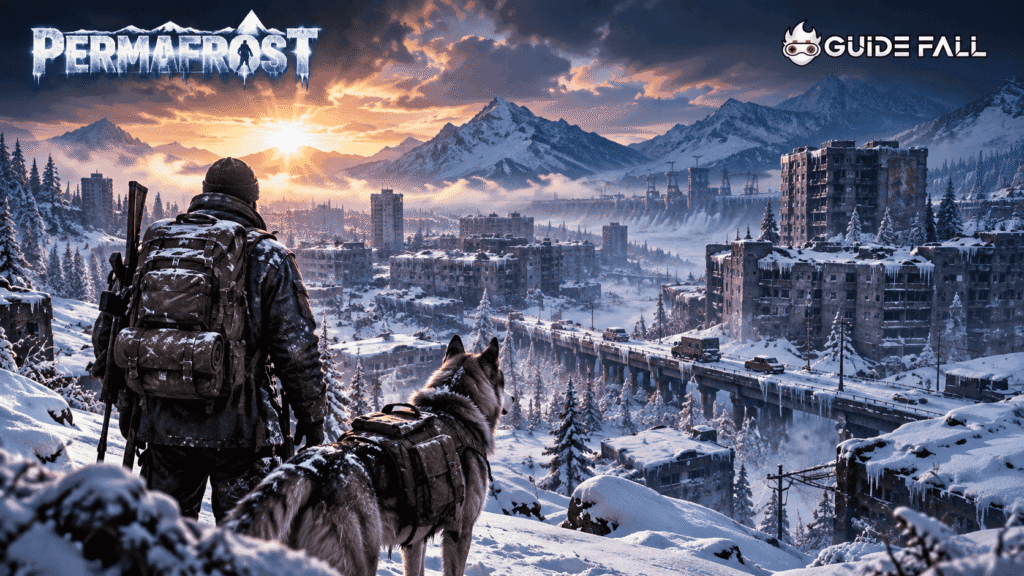
The destruction of the moon has drastically changed conditions on Earth. A world that once supported human civilization has become a frozen wasteland dominated by extreme weather.
Modern infrastructure no longer works as it should. Entire settlements have been abandoned, roads have become difficult to navigate, and everyday necessities have turned into valuable resources.
Against this backdrop, players follow Rook, an engineer searching for an old friend after receiving a radio signal.
This personal mission gives players a reason to venture beyond the relative safety of their shelter.
Rook isn’t simply exploring to collect materials or craft better equipment. There’s someone out there he wants to find, and reaching them means traveling through dangerous territory.
The setting also raises an interesting question: With modern technology no longer functioning as it once did, can humanity find a way to rebuild?
The Cold Is More Than Just a Visual Effect
Snow is often used in video games to create beautiful scenery. White mountains, frozen lakes, and ice-covered trees can make even the harshest environments look impressive.
In Permafrost, however, freezing temperatures serve a much greater purpose.
Spending too long outside can put your character’s survival at risk. That means preparing for an expedition involves more than packing weapons and tools.
Players also need to think about staying warm.
Imagine spotting a promising building in the distance. It doesn’t look particularly far away, but reaching it will take time. Meanwhile, your condition is getting worse, and your supplies are running low.
Do you keep searching or turn back before it’s too late?
Decisions like these show why extreme weather can be more threatening than an ordinary enemy.
Hostile characters may have specific locations or attack patterns. The cold, on the other hand, remains a constant problem whenever players venture into dangerous areas.
Food and Supplies Aren’t Easy to Find
One of the biggest challenges in any survival game is keeping your character’s basic needs under control.
In Permafrost, players must search for food, materials, and essential equipment to continue their journey.
Unfortunately, a world devastated by disaster doesn’t make those necessities easy to find.
Abandoned buildings might contain useful items, but not every location offers enough rewards to justify the risks involved.
You could spend considerable time searching an entire building only to leave with a handful of supplies.
That’s why gathering resources isn’t simply about picking up everything you see.
Players need to consider what each item is actually worth. Materials that initially seem useless might become essential for crafting equipment later. Meanwhile, carrying too many unnecessary items can make inventory management more difficult.
Having plenty of supplies doesn’t always mean you’re prepared for danger.
Exploring Cities Left Behind
The open world of Permafrost allows players to explore locations abandoned after the catastrophe.
Once-busy cities have become silent. Buildings, vehicles, and public facilities remain as reminders of what everyday life looked like before everything changed.
These environments serve two purposes.
First, abandoned locations provide opportunities to search for useful materials and equipment.
Second, the ruins help communicate the scale of the disaster and its impact on civilization.
An empty building doesn’t necessarily need enemies to be interesting. Sometimes, the objects left behind are enough to suggest what life was like for the people who once lived there.
Still, exploration depends heavily on variety.
If every building contains the same kinds of supplies, searching through abandoned locations could quickly become repetitive.
On the other hand, areas with different resources, environmental conditions, and challenges could give players stronger reasons to keep exploring.
Building a Shelter in a Frozen World
After spending time exploring dangerous territory, players need somewhere to rest and store their supplies.
Permafrost includes shelter-building and crafting systems that allow players to make use of the materials they collect.
However, having somewhere to live doesn’t mean every problem has been solved.
Supplies still need to be gathered, equipment must be crafted, and everyday necessities remain important.
This creates a connection between exploration and construction.
Traveling farther increases the chances of discovering valuable materials. Unfortunately, longer journeys also bring a greater risk of encountering severe weather or running out of supplies.
Early on, players may spend most of their time trying to meet basic survival needs. Once they obtain better equipment, they can focus on improving their shelter and exploring more distant locations.
The system has the potential to become particularly rewarding if each upgrade provides a noticeable improvement to the player’s chances of survival.
A Loyal Dog Along for the Journey
One of the more interesting features in Permafrost is the dog that accompanies players during their adventures.
In a world where much of civilization has disappeared, having a companion changes the atmosphere.
The dog isn’t simply there for decoration. It can help carry items and warn players when danger is nearby.
Both abilities are useful in a game built around exploration.
Additional carrying capacity can make longer expeditions more manageable, while warnings about nearby threats give players an opportunity to pay closer attention to their surroundings.
But the dog’s presence also makes the journey feel more personal.
Rather than exploring every abandoned building and snowy landscape alone, players have a companion by their side.
It’s a relatively simple feature, but it could help create an emotional connection without requiring the world to be filled with other characters.
Other Survivors Can Be Dangerous
Extreme weather isn’t the only threat in Permafrost.
In a world where resources are limited, other people can also become dangerous.
With food and equipment difficult to obtain, survivors have good reasons to protect whatever supplies they possess.
These circumstances create opportunities for difficult moral decisions.
Would someone still be willing to help another person when their own supplies are nearly gone?
Under normal circumstances, helping someone in need might seem like an obvious choice. But the situation becomes more complicated when doing so could put your own survival at risk.
Choices like these could add depth to the story if they lead to meaningful consequences.
What matters isn’t necessarily how many decisions the game offers, but whether those decisions actually affect the journey.
Cold Zones and the Risks of Finding Valuable Resources
Not every location in Permafrost presents the same level of danger.
The game introduces Cold Zones, areas with particularly harsh conditions that offer greater challenges alongside opportunities to obtain valuable resources.
Exploring these locations requires players to weigh the potential rewards against the risks.
Certain materials might be worth searching for, even if obtaining them means traveling through dangerous territory.
But what happens if you don’t have enough supplies for the return journey?
What if your character’s condition starts deteriorating just after finding the item you came for?
The experience can remain tense even without combat.
However, the difficulty needs to feel balanced.
If players can overcome every environmental threat simply by carrying enough equipment, these dangerous areas might eventually lose their appeal.
On the other hand, if the challenges are too punishing without giving players a reasonable opportunity to prepare, failure could feel unfair.
Surviving Together With Friends
Alongside its single-player experience, Permafrost offers cooperative multiplayer.
This allows players to work together to gather resources, build shelters, and explore the frozen world.
When playing alone, every responsibility falls on one person.
Playing with friends creates opportunities to divide the workload.
One player might gather materials while another prepares equipment or works on construction.
However, cooperation can also introduce complications.
What happens when one player wants to explore a new area, but the rest of the group isn’t ready?
What if the collected supplies aren’t enough for everyone?
Different priorities can influence the decisions a group makes.
Playing alone may place greater emphasis on isolation and limited resources, while multiplayer introduces challenges involving coordination and shared responsibilities.
Both approaches offer different ways to experience survival.
Does Permafrost Bring Anything New to the Survival Genre?
Survival games are nothing new.
Plenty of titles already feature resource gathering, shelter construction, crafting, and open-world exploration.
Simply including those familiar mechanics isn’t enough to make Permafrost stand out.
Its real appeal lies in how those systems could work together.
Freezing temperatures force players to consider how long they can safely travel. Food shortages encourage exploration, while shelter construction helps prepare for future expeditions.
If these mechanics complement one another, the game could create meaningful challenges without constantly relying on hostile enemies.
There are potential drawbacks, though.
Resource gathering can become tedious when players repeatedly perform the same activities. Managing basic survival needs can also interfere with exploration if those systems become too demanding.
Ultimately, Permafrost will need to find the right balance between difficulty, freedom, and character progression.
Conclusion
Permafrost presents a post-apocalyptic world where extreme temperatures are among the greatest threats to survival.
Exploration, resource management, shelter construction, and interactions with other survivors form the foundation of its survival experience.
Rook’s search for an old friend also provides a personal objective beyond simply gathering supplies and staying alive.
But the most interesting aspect of Permafrost isn’t just its snow-covered world.
It’s the importance of every decision.
Players might exhaust their supplies while searching for food. Exploring a dangerous region could lead to valuable equipment, but finding something useful doesn’t guarantee a safe journey home.
At its heart, Permafrost explores a straightforward but compelling survival concept: You can avoid enemies, but you still have to face the freezing environment every single day.
And sometimes, knowing when to turn back matters more than having the courage to keep going.